A launch and a relaunch
The Ergo

Hi *|FNAME|*,

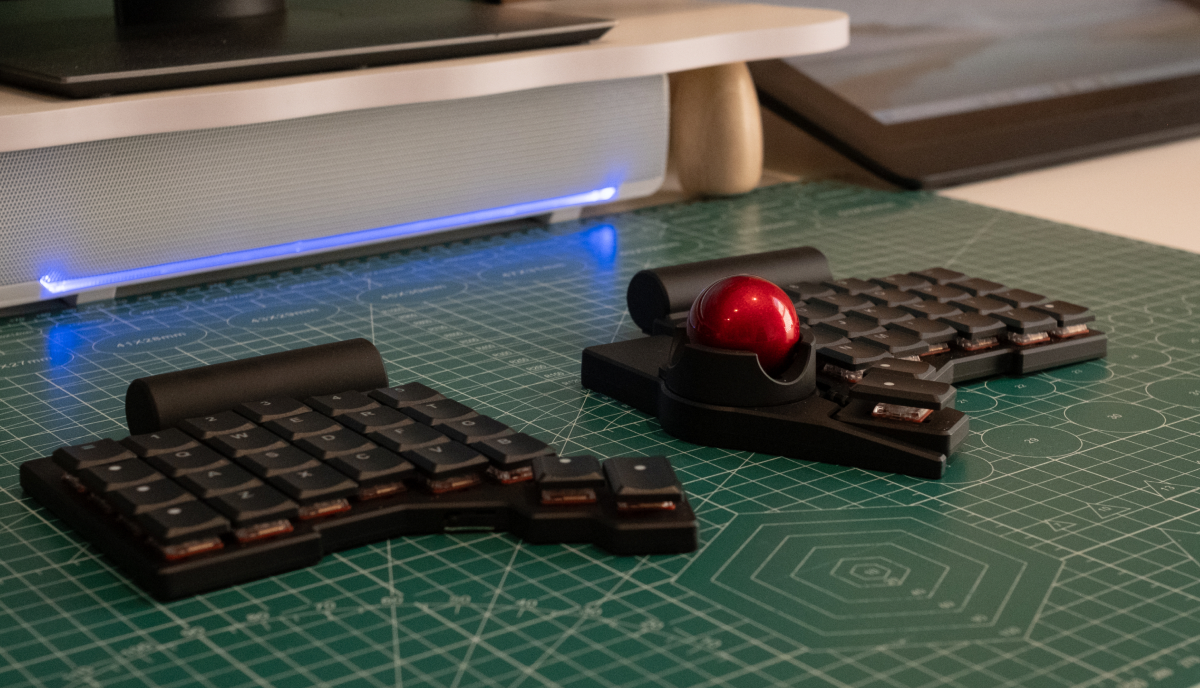
I'm writing this on Tuesday evening, after we launched the Wireless Voyager earlier today. It is the most ambitious product ZSA has made to date, and this was our most complex launch ever. The website, Oryx, and a whole set of tools and underlying firmware all had to work together. For this to happen we needed to test things thoroughly, again and again (and again), and communicate clearly with each other within the team and with our external testers.

The launch went off flawlessly. Everything worked. The website, the email, Oryx, everything. And because Robin, Mike, and Nick spent so much time with the Wireless Voyager in the months leading up to the launch, they were all able to answer everyone's questions from personal experience with the board and not from a script. Response has been wonderful so far, both in words and in actual dollars. If you're one of the hundreds of people who got a Wireless Voyager at launch, thank you for supporting our small indie business with your hard-earned cash. I get a little emotional when I stop to consider the trust you all place in ZSA. It means a lot.

So that was the launch — but there was also a relaunch, which is our silent Platypus keyswitches. When we got 100 sets of these last month they sold out in a day. Now we have 150 sets waiting for you, and the product is back on the accessory store. People have been loving these.

This is not all that's been happening this month — we also improved one of the most advanced features in Oryx, combos. More on this just below, as well as a great interview with Adam Pollard, and QR codes made of stick figures.

As always, thank you for reading!

All the best,
Erez

Introducing layer-independent combos

Introducing layer-independent combos

A powerful feature made even better

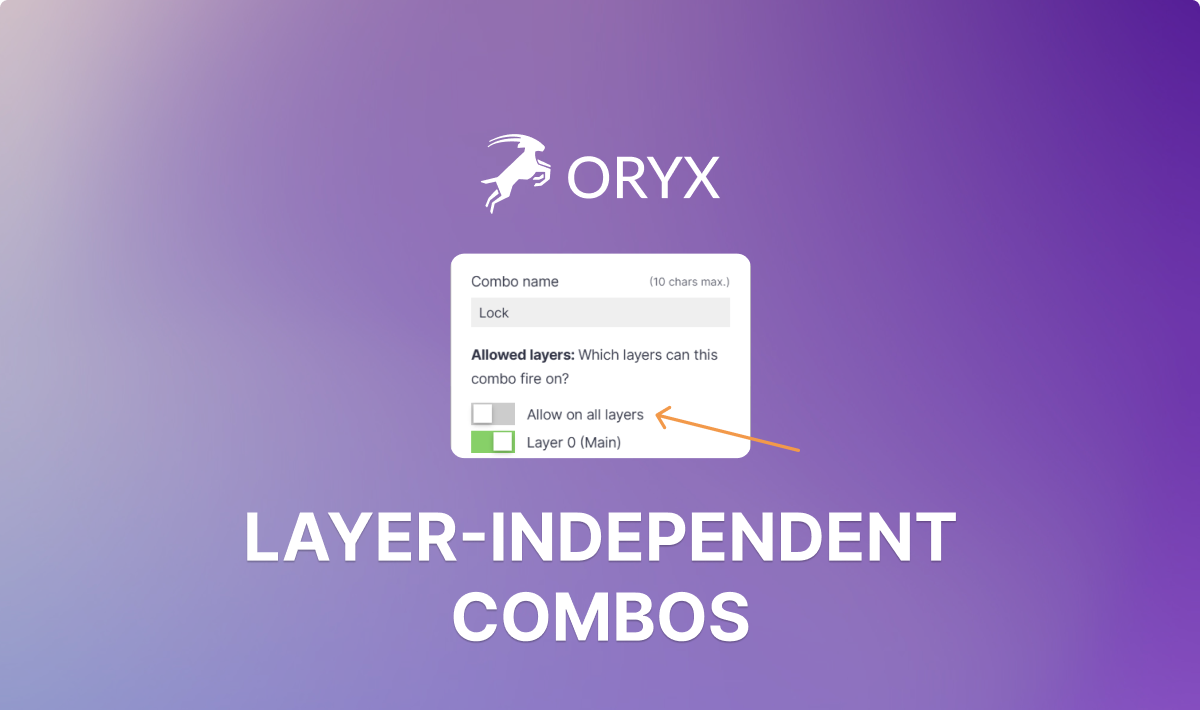
Combos let you do things by pressing two or more keys at the same time. It's an advanced feature well worth exploring, and now it's even better because you can limit combos to only trigger on certain layers.

Introducing layer-independent combos
 

Featured User Interview

Adam Pollard

Senior Product Manager @ ROLI
What surprised me the most about Adam's interview was his Moonlander layout, which is as minimal as I've seen. There are also great pics of his conservatory office and some excellent climbing-related media recommendations.
"I also get to watch wild rabbits hop about whilst I work. In theory they’re a distraction. In practice they are joyful and contribute to me wanting to spend time at my computer."
 
Layout of the month

Analyst Developer

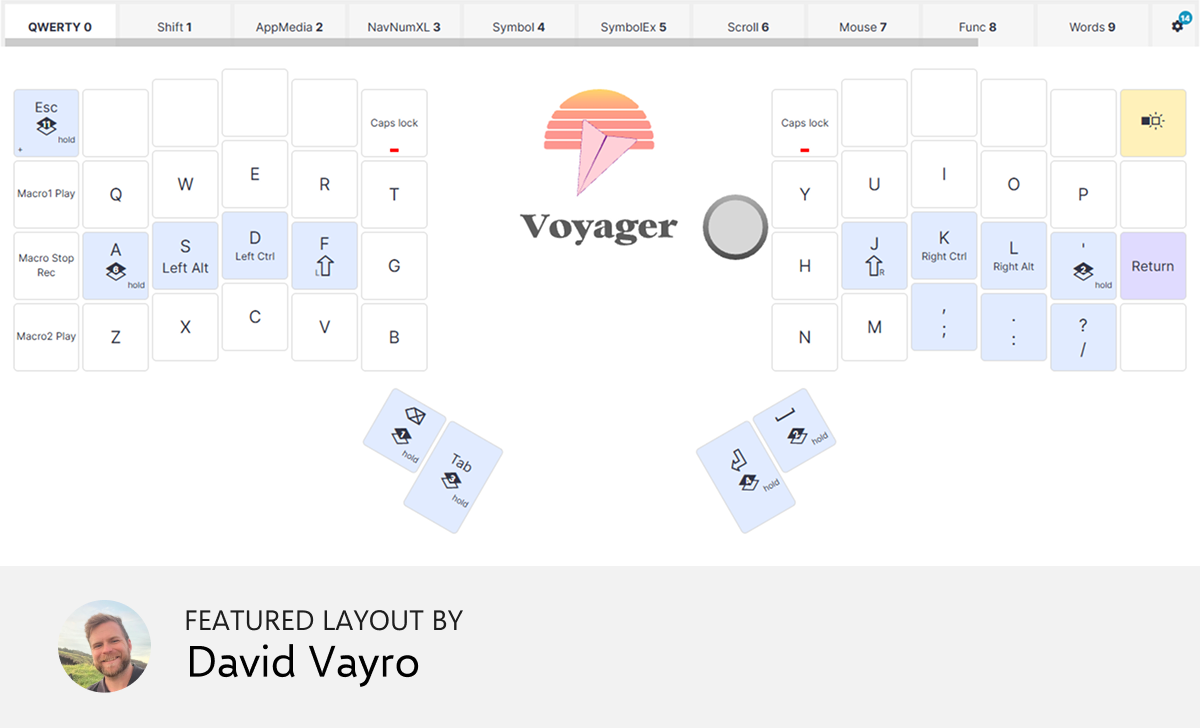
This layout is built around my day-to-day work as a Windows-based business intelligence developer. My normal day includes Excel, Databricks, Power BI, Teams, and general text editing. I removed most of the top row, as I found I’d get lost trying to use the keys here. I also avoid the outer columns, so this layout transfers reasonably well to a 34-key board.


New on typ.ing this month

Orlando

Type some Virginia Woolf! On its surface the biography of a fantastic Elizabethan nobleman, the novel is frequently described as a love letter to Vita Sackville-West, who had a lengthy affair with Woolf in the early 1920s. It's got some absurd fantasy, so it's supposed to be quite funny. It's also just six chapters, 78k words.

And also...
 

Things we liked

Scariest site around

Here’s one that gives me the chills. It is a long and comprehensive list of defunct keyboard companies, each with its years of operation and a little story of what it was like and what happened to it. There are also some defunct keyboard-related content creators and designers. Hardware is hard, please keep buying our keyboards. :)

 
QR codes, but stick figures

This is a free QR code generator with no underhanded business model behind it. That alone makes it useful. But the reason I’m sharing it with you is that it makes funky-looking QR codes full of little stick figures; they look vaguely like neanderthal cave art, but somehow they still work and scan just fine on my phone. Maybe we should use these on our packaging.

 
Raycast, but open-source, small, and free

Personally, I’m a hardcore Alfred user for years now, preceding the deluge of AI-assisted software. Alfred isn’t a subscription, and I paid for it. But if I wasn’t already a paying customer, I would take a good look at Tinycast. It is directly inspired by Raycast, but it’s open-source and free. It even runs Raycast extensions.

 
How random are you?

This is a browser-based toy that uses speech recognition and a simple prediction algorithm. You say a number out loud, from 1-9. It tries to guess what number you’ll say. I did this 55 times, and it guessed right 12 times, which is 22%. Blind guessing would have been about 11%, so I’m much less random than I thought I was.

 
Vocal synth

This site makes sounds by modeling our anatomy. So you get the soft palate, the teeth and lips, the tongue, and you can move them around and make sounds. There’s a built-in beatbox, but you can also generate speech and make it sing. In every mode, you can see the air moving through the body to understand how the sounds are made. The speech mode is extra-eerie.

 
Tip: We have a subscriber-only link archive with all of the links we shared over the years. Just for you. ❤️
contentText buttonText buttonCTASrc
Get wallpaper

Wallpaper of the month

This is a shot from when we went to Frankfurt. The city is full of beautiful graffiti and stickers all over the place, so we put our happy little platypus on there too.

Thank you for reading!

Thank you for reading!
© , ZSA Technology Labs Inc.
250 University Avenue, Suite #200, Toronto, ON, M5H 3E5